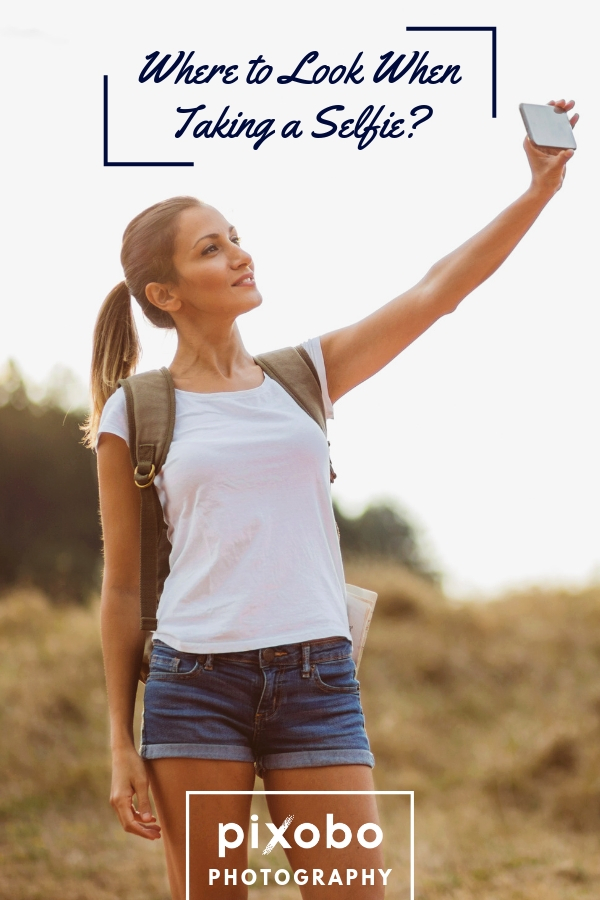
Let’s just all agree that modern human beings feel the urge to take a selfie once in a while. You might be looking stunning that day and want everyone to see that, or you might be standing in front of a world-famous attraction and want to remember the moment with your face included.
One-sentence summary: for most strong, engaging selfies aim to look into the camera lens with the phone slightly raised and the light soft and even. Taking a selfie has become a craft people can learn quickly.
Even if you think you are ‘not photogenic’, a few reliable techniques about where to look, how to hold your phone, and how to use light will make a huge difference. There are so many different tricks that you can learn to help you take a better selfie, but the eyes usually deserve the most attention because they convey connection, mood, and expression.
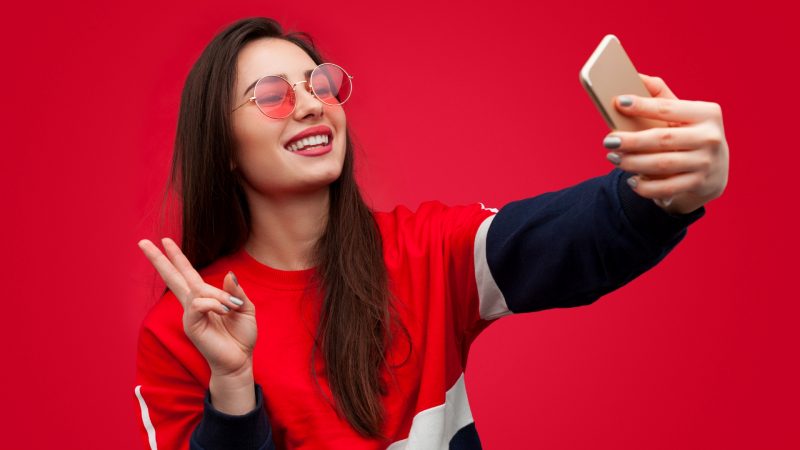
Related: 10 Tips On How To Take A Good Selfie If You Are Not Photogenic At some point you may ask yourself:
- “Where to look when taking a selfie?”
- Is it OK if you look at yourself on the screen?
- Or should you stare directly into the camera?
- What about looking to the side — when does that work?
The short answer is: you can look wherever you want depending on the mood you want to create, but if your goal is engagement and a friendly, direct feel, look into the camera lens while using a slightly elevated phone angle and soft light.
Below you’ll find detailed options with pros, cons, a consolidated phone-hold section, a quick micro-routine, a one-minute self-test, lighting fixes, a do/don’t list focused on eyes, mood examples mapped to gaze, and a short FAQ for fast answers.
How to Find Your Best Side?
Start by discovering which angle and side flatter you most; once you know your best side, eye placement completes the expression. Use this short 4-step micro-routine every time you want a quick, high-quality selfie: Posing matters even more when you direct someone else; see our tips on how female models pose in photography.
- Find angle: tilt your head and phone to test which side looks best (see the 1-minute self-test below).
- Set light: face a soft light source or open shade so your face is evenly lit.
- Stabilize phone: hold the phone steady (use two hands or a stable grip) or set it on a stand.
- Look at the lens and shoot: raise your eyes to the front camera lens and take several frames.
Phone Angle, Grip, and Holding Technique (consolidated)

Lift your phone a bit higher than your face so the camera sits slightly above eye level; this reduces distortion, slims the jawline, and enlarges the appearance of the eyes. For stability and composition trade-offs: a single-hand hold is quick and flexible for casual shots, but holding the phone with both hands or bracing your elbows gives sharper photos and steadier framing.
If you use both hands, one thumb can tap the shutter or trigger a timer; if you use one hand, tuck the elbow in close to reduce shake. Combine a slightly raised angle with a two-handed steady hold when possible, or use a timer/tripod for the sharpest result. This consolidated paragraph replaces repeated angle/hold advice elsewhere to keep guidance compact and consistent.
Quick 1-Minute Best-Side Self-Test
Follow this 3-step self-test to identify your best side in under a minute:
- Take three photos holding the phone exactly the same way: one facing straight on, one turning left, one turning right.
- Compare the three at full size on your screen for jawline, eye size, and overall balance.
- Repeat once with the phone slightly higher to confirm which position consistently flatters you most.
It’s All About the Light
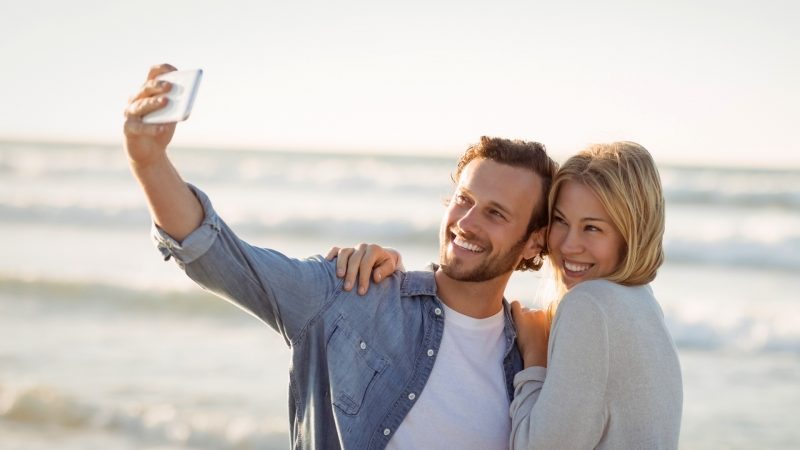
Light is incredibly important: it can flatter your face or highlight features you’d rather downplay. Natural light is usually the most flattering, but it has pitfalls. Quick lighting fixes to avoid common mistakes:
- Midday sun: avoid direct overhead sun; move into open shade or use your head to cast a soft shadow to create a halo without harsh highlights.
- Overhead bulbs: don’t stand directly under a ceiling light unless you want dramatic shadows; instead, face the light or angle your head slightly upward toward it to soften bagging under the eyes.
- Backlight: if the subject is backlit, use fill light (phone screen, reflector, or soft lamp) or move so the light falls on your face rather than just behind you.
You can also intentionally keep the bulb above you for creative looks, but then slightly raise your chin and turn toward the light to avoid unflattering shadows on the eyes and under the nose. Lighting quick fixes summary: avoid harsh midday sun, don’t pose directly beneath bright overhead bulbs, and add fill if you are backlit.
Consider Showing Off a Side
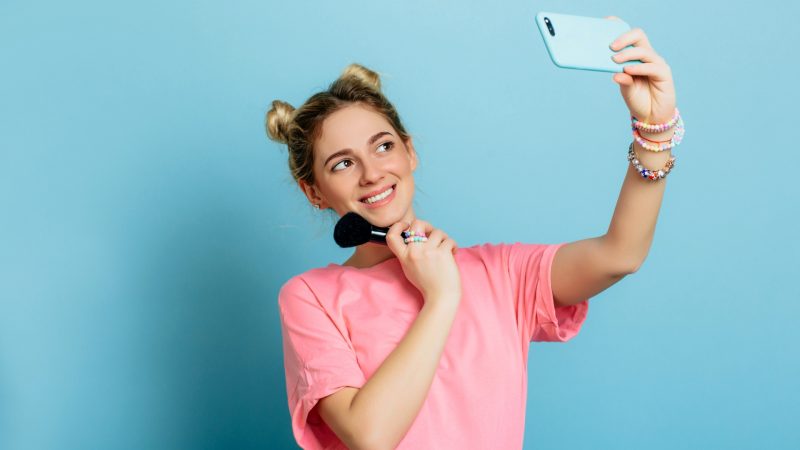
Some research and anecdotal reports suggest viewers sometimes prefer the left side of a face slightly more often than the right, but results vary by person and context; treat this as a flexible suggestion rather than a hard rule scientists have examined related patterns. If you don’t yet know your best side, trying your left profile is a reasonable starting point — then rely on your own test shots to decide what actually looks best.
Where to Look When Taking a Selfie?
Now we’re ready to focus on the eyes. There is no single right answer for every shot: your eye direction should match the mood and message you want to convey. Below are a focused do/don’t list, quick mood-to-eye examples, and practical tips that make decisions fast and repeatable.
Do / Don’t: Eye Placement (6 quick rules)
- Do: Look into the camera lens for a direct, engaging selfie that feels like eye contact with the viewer.
- Don’t: Keep staring at your screen during the final shot — use the screen to frame, then shift your gaze to the lens.
- Do: Angle your gaze slightly toward the camera when doing side glances to avoid a whitish, pupilless look.
- Don’t: Look fully away in bright light without adjusting; you may lose visible pupils and expression.
- Do: Use a gentle squint or ‘smize’ (smile with the eyes) to add natural sparkle when looking at the lens.
- Don’t: Force an overly wide-eyed stare — blink and relax, or close and reopen eyes just before the shot if needed.
Mood → Eye Direction → Pose (quick examples)
- Mysterious → Side glance, eyes toward the far corner → Slight shoulder turn away, chin down and soft expression.
- Engaging → Direct gaze into the lens → Neutral smile, chin slightly forward, phone raised above eye level for flattering proportions.
- Playful → Look up or roll eyes slightly → Big grin, head tilted, exaggerated expression for a fun, candid feel.
1. Stop Looking at Yourself!
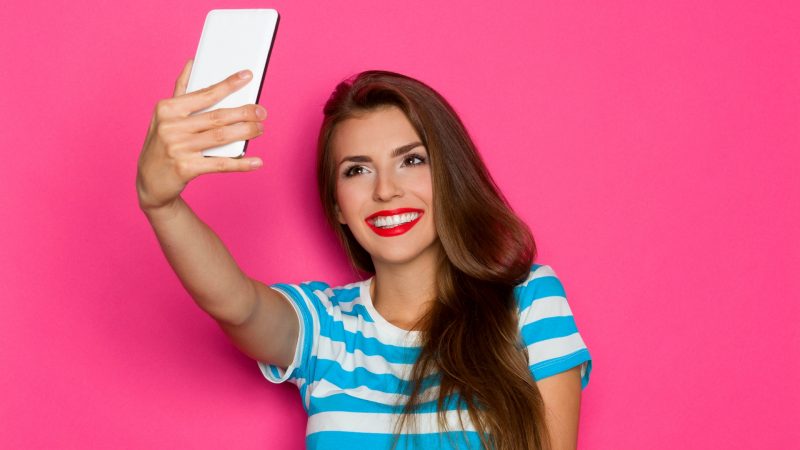
Most people frame by watching their own screen, which is fine for setup. But if your goal is a compelling selfie, set and refine your pose while looking at the screen, then raise your eyes to the camera lens for the final frames. Looking at the lens creates connection with the viewer and prevents the selfie from appearing like someone lost in their reflection. In short: use the screen for framing, not as the final point of focus.
2. Look Right into the Camera Lens

Looking directly into the camera lens produces the strongest sense of eye contact and warmth. Set up your angle and pose while checking your reflection, then lift your gaze to the lens and take a few frames. If the camera is at face level, features can appear compressed; to avoid this, place the phone a little higher and push your chin forward slightly. This slims the face, elongates the neck, and makes the eyes look bigger while keeping direct connection.
3. When Is It Appropriate to Look to the Side?

A side glance can create a softer, more mysterious, or candid vibe — great for storytelling or editorial-style selfies. Moderation matters: if you look completely away, the camera may miss your pupils and you can get a washed-out or ‘white eye’ effect.
To avoid that, angle your gaze slightly toward the camera instead of fully away and try this quick palm trick: hold your hand near the camera and fix your eyes at the beginning of your palm so the gaze is directed slightly inward while still appearing to look away. One-line caution: if you risk showing too much white in the eyes, tilt the gaze inward toward the lens a touch to preserve visible pupils.
4. How About Closing Your Eyes?
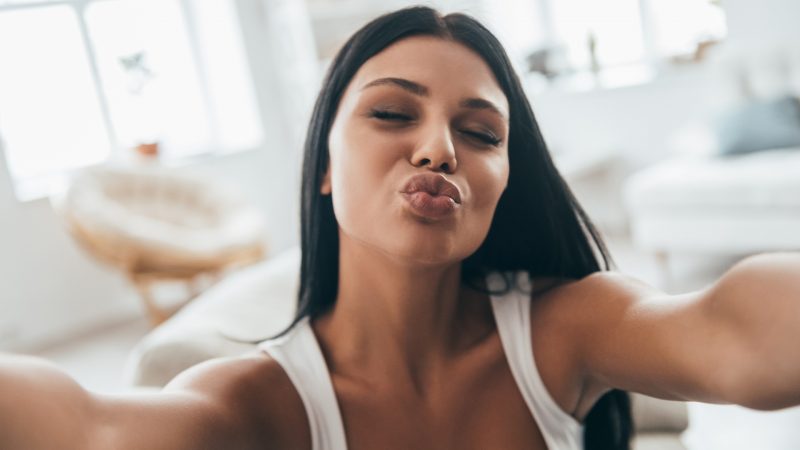
Closed-eye selfies can be mood-rich (dreamy, peaceful) but are best used intentionally. If bright light makes you squint and you want eyes open, set your angle, close your eyes, then open them immediately before the shutter. This reduces blinking and captures a natural, alert look.
5. How to Get Rid of the Red Eyes?

Red-eye often appears when flash is necessary. To reduce it: avoid looking directly into the flash; enable your phone camera’s anti-red-eye option by checking the camera settings menu for an “anti-red-eye” or “red-eye reduction” toggle, use editing tools in your phone’s photo app to correct red-eye afterward, or angle your face slightly away from the flash and add a soft fill light.
As a rule: use flash sparingly; try fill lighting, a nearby lamp, or a reflector before resorting to direct flash. If flash is unavoidable, angle the gaze off-axis from the flash and enable any anti-red-eye feature in settings.
6. How to Make Your Eyes Sparkle in the Photos?

A selfie ring light is an easy, low-cost way to add catchlights and even illumination. If you prefer natural approaches, try these simple techniques:
- Face a soft, diffused source (window light or open shade) so catchlights appear in the eyes.
- Use a reflective surface (a white wall, light-colored table) in front of you to bounce light up into the eyes from below.
- Position a small bright object (phone screen, lamp) just below the camera to create subtle catchlights without harshness.
Small adjustments like a slight smile with the eyes or a relaxed squint (the ‘smize’) also make eyes appear livelier. Natural alternatives summarized: window-facing position, reflective bounce, or a small fill source near the camera all help create catchlights without extra gear.
Related: 6 Most Common Phone Camera Mistakes Everyone Does
FAQ (Quick answers to common questions)
- Where do you look when taking a selfie? For most engaging selfies, look into the camera lens; for mood or editorial shots, a side glance works if you angle the gaze slightly toward the camera to preserve pupils.
- Is it OK to look at yourself on the screen? Yes for setup and framing, but shift your eyes to the lens for the final shot to create connection with the viewer.
- How do I avoid red-eye? Check your camera app settings for an anti-red-eye or red-eye reduction toggle, avoid direct flash when possible, and use your phone’s editing tools to remove red-eye if needed.
- How do I make eyes sparkle? Use soft, front-facing light or a ring light; natural options include facing a window or using a small reflector to add catchlights.
- What is the best angle for a selfie? Hold the phone slightly above your eye level and tip your chin forward a touch. Shooting from just above eye level reduces distortion, slims the jawline, and makes your eyes look bigger — the most flattering angle for most faces.

Where to look when taking a selfie? You now have a clear playbook: pick your best side with the quick self-test, place the phone slightly above eye level, stabilize your hold, favor soft front lighting, and aim your eyes at the lens for connection unless you’re intentionally creating a mood with a side glance. Quick Takeaway Checklist (4-6 steps)
- Angle: phone slightly above eye level to avoid distortion and enlarge the eyes.
- Eyes: look into the lens for connection; use slight side glances for mood but angle the gaze toward the camera.
- Light: use soft, front-facing light or open shade; avoid harsh midday sun and direct overhead bulbs.
- Grip: prefer two-handed holds or braced elbows for steady shots; single-hand is fine for quick photos.
- Final check: frame on the screen, then raise your gaze to the lens and tap the shutter or use a timer for steady shots.
You’re welcome! Now that you know dozens of practical tricks, we hope they help you take the perfect selfie next time you pull your phone out. I also suggest reading our article about how to take good photos with the phone.